
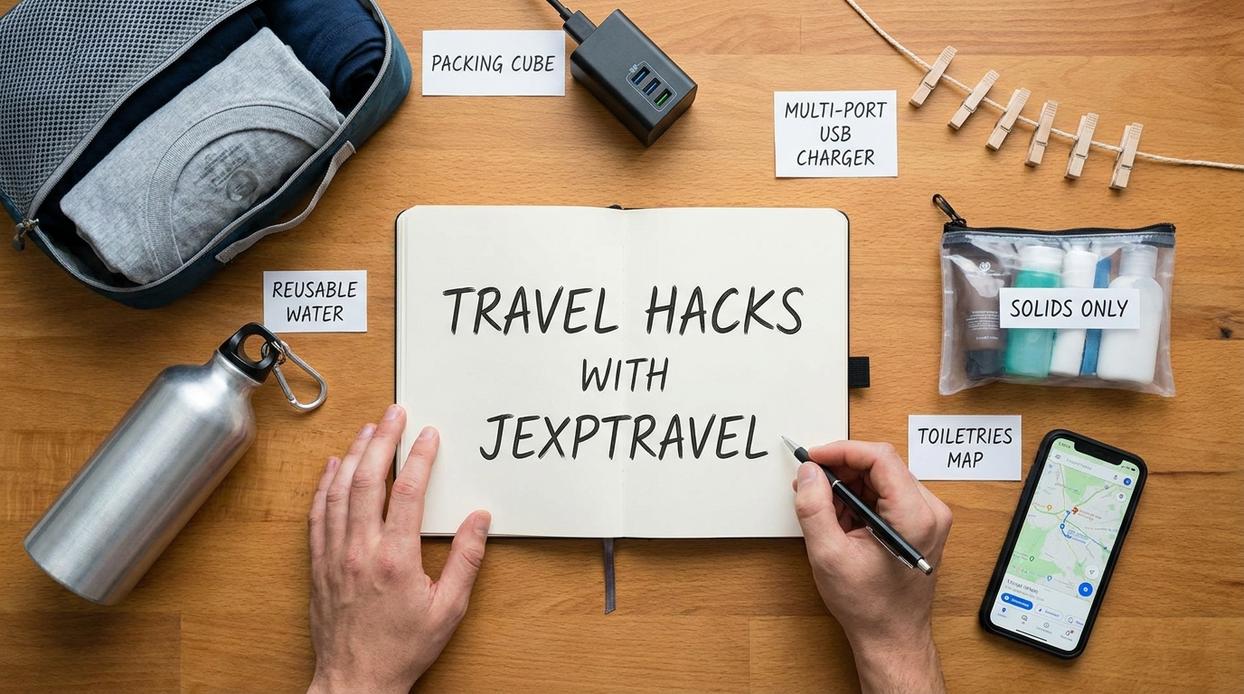
I’ve planned hundreds of trips that looked perfect on paper but felt empty when I actually got there.
You know the feeling. You follow the guidebook, hit the major sites, take the photos. Then you come home wondering why it didn’t feel as good as you hoped.
Most travel advice tells you where to go. It doesn’t tell you how to actually connect with a place.
That’s why I created the travel hacks jexptravel method. It’s not about seeing more. It’s about experiencing differently.
I’ve tested this approach across six continents. The difference between tourists who feel transformed and those who feel like they just checked boxes? It comes down to a few specific choices most people never think about.
This guide shows you how to turn any trip into something that sticks with you long after you unpack.
You’ll learn how to find the spots locals actually care about. How to plan in a way that leaves room for the unexpected. How to budget without missing out on what matters.
No fluff about finding yourself or becoming a different person. Just practical ways to make your travel time count.
Phase 1: The Pre-Travel Mindset – Planning for Discovery, Not Just Logistics
Most people start planning a trip by picking a place.
Paris. Bali. Tokyo.
But here’s what I learned after years of coming home from trips feeling like something was missing. The destination isn’t actually the problem.
It’s that we skip the most important question.
Define Your ‘Why’
Before you book anything, sit with this for a minute. What do you want to feel when you get back?
I’m not talking about seeing the Eiffel Tower or checking off bucket list items. I mean the actual experience you’re after. Maybe it’s the kind of relaxation where you don’t check your phone for three days straight. Or the rush of doing something that scares you a little.
Back in 2019 when I planned a trip to Portugal, I thought I wanted beaches and wine. Turns out what I really wanted was to feel creatively inspired again. Once I figured that out, everything changed. I spent less time on crowded tours and more time in small galleries and local markets.
Your why becomes your filter for every decision after this.
Research Like a Local
Skip the top-10 lists for a second.
I know they’re tempting (and sometimes useful). But if you want to actually experience a place, you need to dig deeper. I search for neighborhood guides written by people who live there. I look at event calendars for the weeks I’ll be visiting.
Try adding “local favorites” or “where locals actually go” to your searches. You’ll find the coffee shop that doesn’t show up on Instagram but serves the best cortado you’ve ever had.
The ‘One Thing’ Rule
Here’s a trick that’s saved me from decision paralysis more times than I can count.
Pick one non-negotiable experience for each place you visit. Just one.
For me in Kyoto, it was watching the sunrise at Fushimi Inari before the crowds arrived. Everything else on my itinerary was flexible. But that one thing? I built my whole schedule around it.
This isn’t about limiting yourself. It’s about having an anchor when you’re overwhelmed by options.
Pack for a Purpose
I used to pack like I was preparing for every possible scenario. Three pairs of shoes I never wore. Clothes for a fancy dinner that never happened.
Now I pack differently.
I bring one thing that helps me connect with people. Sometimes it’s a small phrasebook (even badly pronounced Thai gets smiles). Sometimes it’s a deck of cards that works anywhere.
And I always pack something for the quiet moments. A journal. A book I’ve been meaning to read. These are the items that turn a long train ride into something you remember.
The travel hacks jexptravel community talks about aren’t just about saving money or packing light. They’re about setting yourself up for the experiences you actually want.
That starts before you ever leave home.
Phase 2: Smart Budgeting & Booking – Spending on Experiences, Not Expenses
Here’s where most travelers mess up.
They either blow their entire budget on a fancy hotel or they cheap out so hard they end up miserable in a hostel two hours from everything they want to see.
Neither approach works.
I’m going to show you how to budget so you actually enjoy your trip without the guilt or the regret.
The 50/30/20 Travel Budget Rule
Split your money like this. 50% goes to essentials (your flight and where you sleep). 30% goes to experiences (that cooking class in Rome or the which is the tallest mountain in africa jexptravel guide you’ve been eyeing). The last 20% stays flexible for spontaneous moments.
Because the best travel stories? They usually weren’t planned.
Strategic Booking: Peak vs Shoulder Season
Let me paint you two scenarios.
Scenario A: You book Paris in July. Hotels cost $300 a night. The Louvre is packed wall to wall. You spend half your time waiting in lines.
Scenario B: You go in late September. Same hotel is $150. The weather’s still good. You walk right into museums.
Same city. Completely different experience.
Shoulder seasons give you the sweet spot. Good weather without the crowds or the price gouging.
The Hub and Spoke Method vs Hotel Hopping
Most people book a different place every two or three nights. Sounds exciting until you’re packing and unpacking five times in ten days.
Here’s what works better.
Pick ONE central location. Book it for your entire stay. Then take day trips.
You save money (weekly rates beat nightly rates). You save time (no constant packing). You actually get to know a neighborhood instead of just passing through.
I used this method in Barcelona last year and it changed everything. My Airbnb in Gracia became my actual home base instead of just another hotel room.
Value Over Cost: The Real Math
That $120 hotel in the city center beats the $80 place an hour away.
Why?
- You’ll spend $15 per day on transportation to get anywhere
- You’ll waste 2+ hours daily commuting
- You’ll skip things because you’re too tired to trek back and forth
The cheaper option costs you MORE when you add it all up.
This is what I mean by spending on experiences instead of expenses. A well-located place isn’t a splurge. It’s an investment in actually enjoying your trip.
Some people say you should just rough it and stay anywhere cheap. That discomfort builds character or whatever.
But I’ve done both. And I can tell you that coming back to a comfortable place in a good location after a long day? That’s not luxury. That’s just smart planning.
Your budget should work FOR you. Not against you.
These travel hacks jexptravel readers use most often come down to one thing. Spend money where it matters and cut costs where it doesn’t.
Phase 3: On-the-Ground Immersion – How to Truly Experience a Place
You’ve done your research. You’ve booked your flights.
Now comes the part most travelers get wrong.
I see it all the time. People land in a new city and immediately sprint toward the big attractions. They check boxes. They take photos. But they never actually feel the place.
Here’s what I do instead.
The First 24 Hours
I dedicate my entire first day to just wandering. No agenda. No must-see list.
I walk without a destination. I find a local market and watch how people shop for their groceries. I sit in a neighborhood cafe (not the one in the guidebook) and just observe.
This isn’t wasted time. It’s calibration. Your senses need to adjust to the local rhythm before you can really understand what you’re experiencing.
Engage All Your Senses
Don’t just look at things.
Listen to the city’s sounds. The call to prayer. The street vendors. The way people talk to each other. Taste the street food that locals actually eat. Notice the smells that make this place different from anywhere else.
I know this sounds basic. But most people forget to do it. They’re too busy getting the perfect Instagram shot.
These sensory details create memories that last. Photos fade. But I can still remember the smell of grilled corn in Mexico City from five years ago.
The ‘Three Block’ Rule
Here’s a simple hack I use at every major tourist site.
After you visit the attraction, walk three blocks in any random direction away from it. Any direction works.
This is where you find the authentic stuff. The shops locals use. The cafes where prices aren’t inflated. The actual neighborhood life.
I stumbled on this by accident in Barcelona. Three blocks from La Sagrada Familia, I found a tiny bakery where the owner taught me how to properly eat pan con tomate. That moment meant more to me than the cathedral itself.
Learn Five Key Phrases
Everyone says learn “hello” and “thank you.” Sure. Do that.
But go further.
Learn “How are you?”, “This is delicious!”, and “Can you recommend a local spot?” in the local language.
These phrases open doors. Literally. I’ve been invited into homes, taken to family restaurants, and shown hidden spots just because I asked in someone’s native language.
The pronunciation doesn’t have to be perfect. The effort is what matters.
Now, here’s my prediction. In the next few years, I think we’re going to see a shift away from the traditional tourist trail entirely. People are getting tired of crowded landmarks and overpriced tourist traps. They want what we’re talking about here: real connection with places.
The travelers who master these immersion techniques now? They’re going to have access to experiences that become harder to find as destinations get more commercialized.
You can find more practical approaches like these in our guide on discovering India jexptravel, where we break down how to connect with one of the world’s most overwhelming destinations.
But here’s the thing.
None of these travel hacks jexptravel teaches matter if you don’t slow down enough to use them. That’s the real secret. Speed kills immersion.
Phase 4: Capturing the Journey – Creating Memories That Last
Most people come home with a camera roll full of selfies and landmark shots.
Then six months later, they can barely remember what the trip actually felt like.
Here’s what I do instead.
Go Beyond the Selfie
I focus on the details. That weathered blue door in Lisbon. The way light hit the market stalls in Bangkok. A kid laughing at something I couldn’t understand.
These small moments tell you more about a place than another photo of yourself in front of a famous building.
When you look back, it’s the texture of a place that brings it alive again. Not proof you were there.
Journaling for a Minute
At the end of each day, I write down three things. Takes about 60 seconds.
A sensory detail. Maybe the smell of rain on hot pavement in Mumbai or the sound of church bells echoing through Florence at sunset.
A feeling I had. Could be wonder or frustration or that weird contentedness you get when you’re completely lost.
And one brief interaction. The waiter who recommended his grandmother’s favorite dish. The woman on the train who shared her snacks.
This simple practice captures what photos can’t. You can find more ways to make your trips memorable through travel hacks jexptravel.
Collect Experiences Not Souvenirs
Skip the magnets.
Instead, bring home a recipe you learned in a cooking class. A few phrases in a language you practiced. The story of how you got hopelessly lost and ended up at the best meal of your life.
These stick with you. They change how you see the world.
That’s worth more than anything you can fit in your suitcase.
Your New Blueprint for Better Travel
You came here looking for travel tips that actually work.
Now you have a complete framework for every phase of your journey.
I get it. You’re tired of surface-level tourism. That nagging feeling that you missed something important on your last trip.
The travel hacks jexptravel method changes that. It’s built on mindful planning and real immersion instead of just checking boxes.
This approach works because it treats travel as an experience worth preparing for. Not a race through landmarks.
Here’s what to do next: Pick one tip from this guide and use it on your next trip. Just one.
Watch how it shifts your entire experience.
You’ll see the difference between going somewhere and actually being there. Between taking photos and making memories that stick.
Start small. The results will speak for themselves.
 Blyxara Dwell