
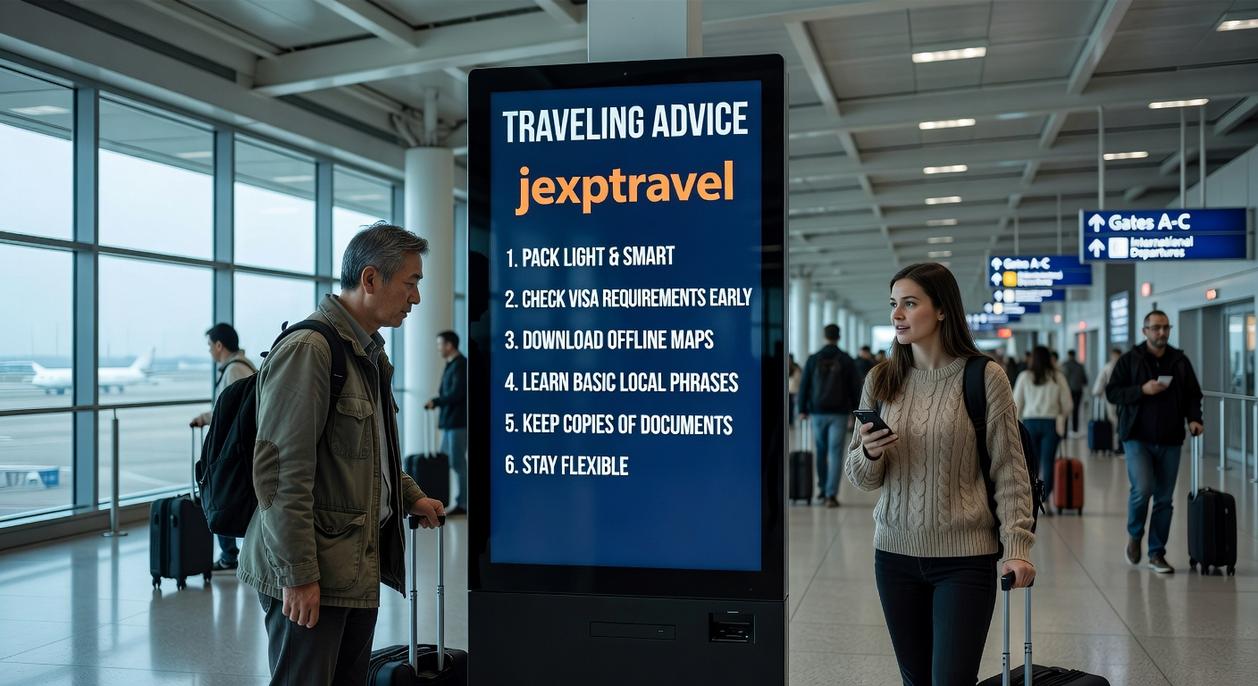
I’ve planned enough trips to know that most people start in the wrong place.
You’re searching for travel tips because your last trip probably didn’t go as smoothly as you hoped. Or maybe you’re staring at a blank itinerary right now, unsure where to even begin.
Here’s the truth: travel planning doesn’t have to feel like solving a puzzle with missing pieces.
I’ve spent years figuring out what actually works when you’re planning a trip. Not the Instagram-perfect advice that sounds good but falls apart in real life. The stuff that keeps you from overspending, missing flights, or showing up to a sold-out attraction.
This guide breaks down everything you need into four simple phases. No overwhelm. No guessing.
Jexptravel exists because I got tired of watching people stress over trips that should excite them. We focus on practical strategies that work whether you’re planning a weekend escape or a month-long adventure across multiple countries.
You’ll learn how to plan smarter from the start. How to avoid the mistakes that cost you time and money. And how to actually enjoy the process instead of dreading it.
By the end, you’ll have a clear framework that turns trip planning from chaos into something you can handle with confidence.
Phase 1: The Blueprint – Strategic Planning & Smart Budgeting
You know that scene in Before Sunrise where Jesse and Céline just wander through Vienna with no real plan?
That’s romantic in movies. In real life, you end up spending $200 on a last-minute hotel room that smells like cigarettes.
I’m not saying you need every minute mapped out. But you do need a blueprint.
Choosing Your Destination
Start with how you actually want to feel on this trip.
Some people need to be hiking at sunrise. Others want to sit in a café for three hours without anyone judging them. Neither is wrong, but picking where to travel in France jexptravel style means matching the place to your energy.
Here’s what most traveling advice jexptravel resources won’t tell you: shoulder season is your best friend. That’s the sweet spot between peak and off-peak. You get decent weather, fewer crowds, and prices that don’t make you wince.
For Europe, that’s usually April to May or September to October.
Crafting a Realistic Budget
Let me be honest with you.
Most people underestimate what they’ll spend. Then they come home stressed about their credit card bill instead of relaxed from their trip.
Break it down like this:
Flights (usually your biggest hit)
Accommodation (hostels to hotels, pick your comfort level)
Food (street food to sit-down meals)
Activities (museums, tours, that random cooking class)
Buffer (because stuff happens)
A simple formula? Take your daily accommodation cost and multiply it by 2.5. That’s roughly what you’ll spend per day including everything else.
The Art of the Itinerary
I’ve seen people create spreadsheets with 15-minute intervals. That’s not a vacation, that’s a military operation.
Instead, try this. Pick one thing you absolutely want to do each day. Just one. Then leave space around it for wandering, for that random shop you spotted, for the local who tells you about a place tourists never find.
Structure gives you direction. Flexibility gives you stories.
Essential Pre-Travel Checks
Before you book anything, check your passport expiration date. Many countries won’t let you in if it expires within six months of your trip. (I learned this the hard way in 2019.)
Look up visa requirements early. Some take weeks to process.
Check what vaccinations you need and whether your destination has any current travel advisories. The government websites are boring but they’re accurate.
Get this stuff done first. Everything else can wait.
Phase 2: The Booking Engine – Securing Value on Flights & Stays
You’ve got your dates. You know where you’re going.
Now comes the part where most people overpay.
I’m not talking about a few dollars here and there. I mean hundreds, sometimes thousands, just because they didn’t know how booking actually works.
Let me clear something up right away. Incognito mode doesn’t really help you find cheaper flights. Airlines aren’t sitting there tracking your cookies and jacking up prices (despite what your friend who “always does this” insists).
What does work? Flight comparison sites.
I use Google Flights and Skyscanner almost daily. They pull prices from different airlines and let you see patterns you’d never spot otherwise. You can set price alerts that notify you when fares drop. You can also play with dates to find the cheapest days to fly.
Here’s what I mean. Flying Tuesday instead of Friday might save you $200. Budget airlines like Spirit or Ryanair can cut costs on short hops, but watch out. They charge for everything from seat selection to breathing (okay, not quite, but you get it).
Now let’s talk about where you’ll sleep.
Hotels give you consistency and customer service. Hostels save money and connect you with other travelers. Vacation rentals offer kitchens and more space. Guesthouses provide local flavor.
None of these is always right or always wrong.
Reading reviews is where people mess up. Don’t just look at the star rating. Scan recent reviews for specific complaints. If three people mention bedbugs in the last month, that’s a red flag. If someone complains the hotel wasn’t beachfront when it never claimed to be, ignore that.
The rental car question trips people up constantly.
You need one in rural Iceland or the American Southwest. You don’t need one in Tokyo or Paris where public transit works better and parking costs a fortune.
When you do rent, the insurance options will confuse you on purpose. Your credit card might already cover collision damage (call and ask before you go). Skip the extras unless you’re driving somewhere truly remote.
Watch for hidden fees too. That $30 daily rate becomes $60 after airport surcharges and fuel policies.
Finally, booking activities in advance.
Some things you must book early. Popular tours sell out months ahead. Think Machu Picchu permits or that cooking class in Tuscany everyone raves about on jexptravel.
But most activities? You can book them after you arrive. This gives you flexibility if weather turns bad or you’re just too tired. Street food tours, museum tickets, day hikes. These rarely need advance reservations.
The key is knowing which category your must-do experiences fall into.
Phase 3: The Perfect Pack – A Guide to Efficient & Smart Packing
I was standing in the airport security line last month when the woman in front of me started unpacking her fourth pair of shoes.
“I might need them,” she told the TSA agent.
For a three-day trip.
Look, I’m not here to judge anyone’s packing choices. But I’ve watched too many travelers struggle with bags they can barely lift. And I’ve heard every excuse for why they need all that stuff.
Here’s what someone once told me: “But what if I need options?”
Fair point. You do need options. Just not 47 of them.
The carry-on versus checked bag debate comes down to one question. Can you handle your trip in what fits overhead?
For trips under a week, I say yes. For two weeks or more, maybe you check a bag. But even then, you’re probably packing too much.
I learned about capsule wardrobes from a friend who spent six months backpacking through Southeast Asia with just a 40-liter pack. She said something that stuck with me: “If everything goes with everything, you never run out of outfits.”
She was right.
Pick three neutral colors. Black, navy, gray. Whatever works for you. Then add one or two accent pieces. Suddenly five shirts and three bottoms become fifteen different looks.
Your tech and documents deserve their own spot. I keep what I call a go-bag (really just a small pouch) with my passport, phone charger, power bank, and a universal adapter. Add your meds if you take any.
I also keep digital copies of everything important. Passport, insurance cards, hotel confirmations. All in a cloud folder I can access anywhere.
Now for the stuff people forget.
A reusable water bottle saves you money and keeps you hydrated. Get one that collapses if space is tight.
Solid toiletries get you through security faster. Bar shampoo, solid deodorant, toothpaste tablets. They work just as well and take up way less room.
And pack a basic first-aid kit. Band-aids, pain relievers, antacids. The kind of things you don’t think about until you need them at 2am in a foreign country.
Someone asked me recently if all this traveling advice jexptravel readers get actually makes packing easier.
I told them the truth. It does once you stop overthinking it.
You don’t need perfect packing. You just need enough of the right stuff to handle whatever comes your way.
The rest? You can probably buy it there. Or realize you never needed it in the first place.
Phase 4: On The Ground – Thriving at Your Destination
You made it.
You’re standing in a new country with your bags and a head full of plans. But here’s where most trips either come alive or fall apart.
Think of this phase like learning to swim. You can read about it all you want, but eventually you have to get in the water.
Managing Your Money Without Getting Soaked
Currency exchange is where travelers bleed money without realizing it.
I use travel-friendly credit cards with no foreign transaction fees for almost everything. They give you the real exchange rate (or close to it) and you’re not carrying wads of cash that can disappear in a second.
But here’s the thing. You still need some local currency. ATMs at the airport? Skip them. The rates are terrible. Wait until you’re in town and find a bank ATM.
Cash works for street food, small shops, and places where cards just aren’t a thing. Think of it like this: your card is your main fuel tank, cash is your reserve.
Staying Connected
Local SIM cards are cheap and they work. Pop one in your phone and you’ve got data everywhere you go.
Don’t want to mess with physical cards? eSIMs are even easier. Download, activate, done.
I rely on Wi-Fi at my accommodation for the heavy stuff like video calls or uploading photos. But for maps and traveling advice jexptravel on the go? You need your own data.
Keeping Your Stuff (and Yourself) Safe
I’m not going to scare you with horror stories.
Most places are fine. But you need to stay aware. Keep your bag in front of you in crowds. Don’t flash expensive gear in sketchy areas. And for the love of everything, learn the local emergency numbers.
Respecting customs isn’t just polite. It keeps you out of trouble.
Actually Experiencing the Place
Learn five phrases in the local language. Please, thank you, excuse me, where is, how much.
That’s it. Those five will change how people respond to you.
Skip the tourist restaurants near the main square. Go where locals eat. Use the bus or metro instead of taxis everywhere.
The market? That’s where the real culture lives.
Your New Toolkit for Smarter Travel
You now have a complete playbook for every phase of your trip.
I built this guide because travel planning shouldn’t feel overwhelming. The stress and guesswork that usually come with booking flights and mapping routes can be replaced with a clear process.
This framework does more than get you from point A to point B. You’ll save money on things that don’t matter and spend it on experiences that do. You’ll skip the tourist traps and find the spots that actually deliver.
Most importantly, you’ll travel with confidence instead of constantly second-guessing your choices.
Here’s what to do next: Pick your next destination and start with Phase 1. Follow the steps we covered and watch how different your planning feels when you have expert traveling advice jexptravel backing you up.
The difference between a stressful trip and a memorable one often comes down to preparation. You have the tools now.
Start planning and see what happens when you approach travel strategically instead of reactively.
 Blyxara Dwell